

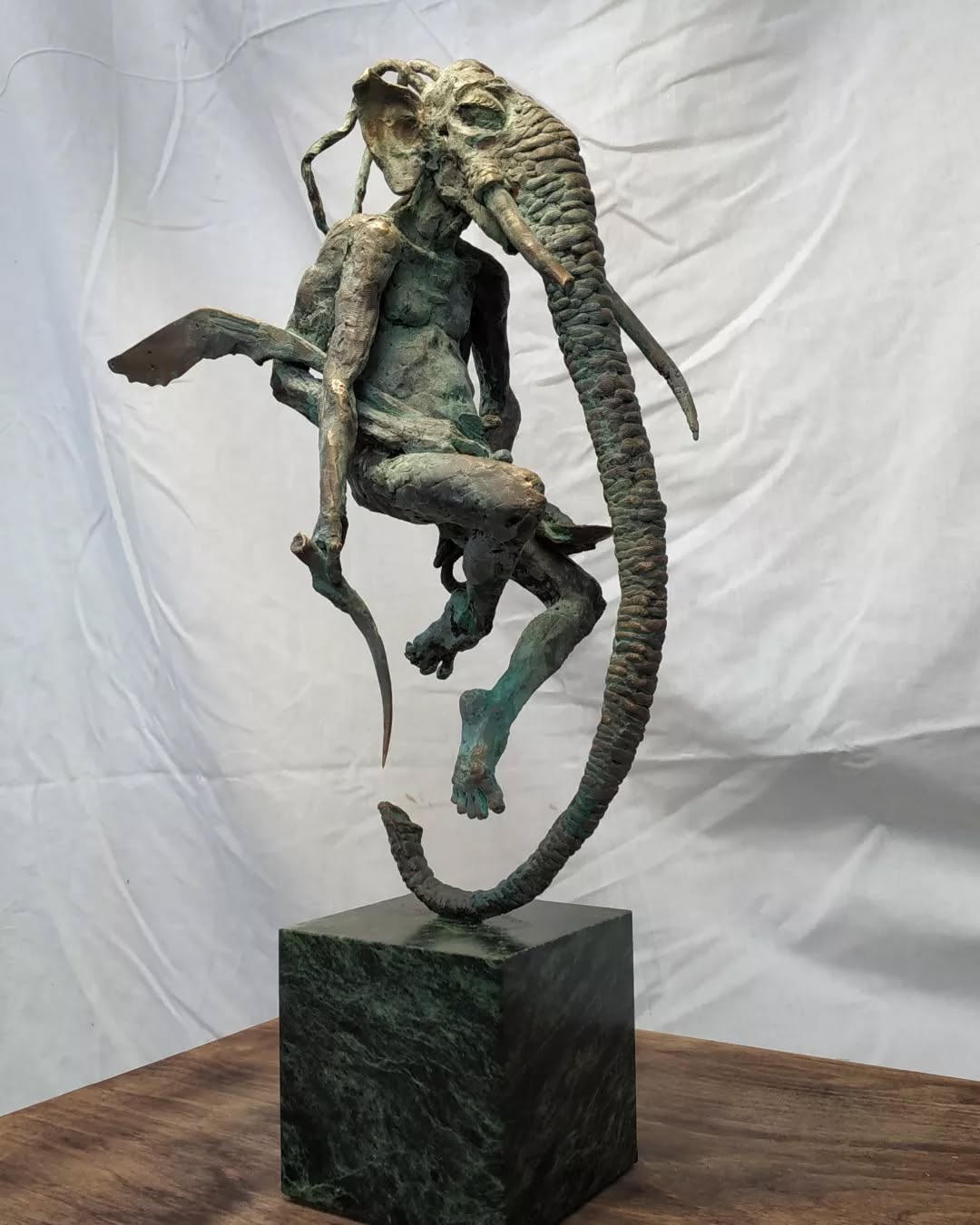
The plinth is the boundary between land and art.
He doesn't just hold the sculpture, he gives it meaning.
Height, material, and ratio all affect how the viewer reads the shape.
I treat the choice of the plinth as a continuation of the composition.
It can be made of stone, metal, concrete, or wood.
Sometimes he himself becomes a part of the sculpture, sometimes — a barely noticeable support, almost a breath.
The plinth dictates the distance, the direction of gaze, and the angle of perception.
When I place the sculpture on the baseboard, the moment of connection occurs.
She finally finds her place.
At this moment, I always feel a slight silence, as if the work has exhaled.
Now she lives separately, enters into a dialogue with space, light, weather, time.
The plinth completes the process, but does not close the story.
It simply marks the boundary: before — work, after — life.
Now the sculpture belongs to the world, to the viewer, to the future.
I'm just watching her change every day, from every angle.
The plinth is the resting point where art meets the ground.


